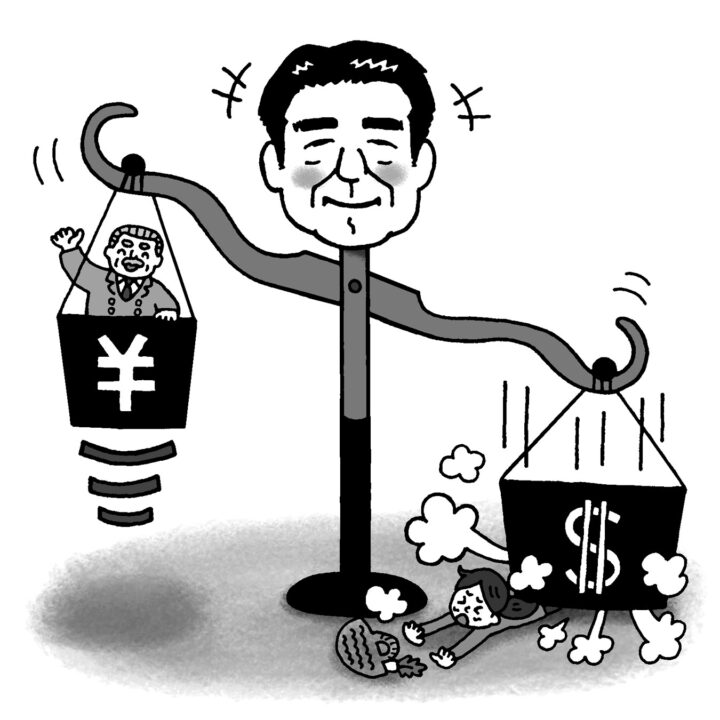
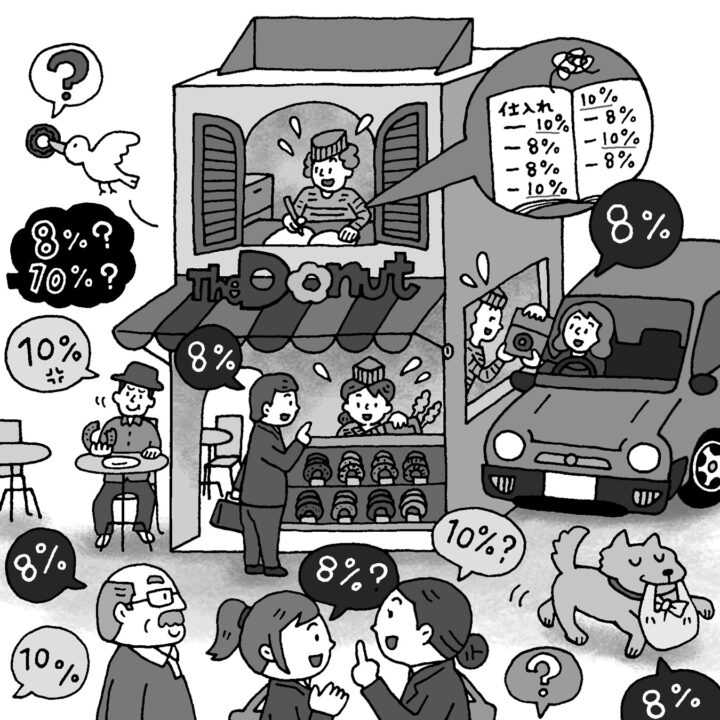
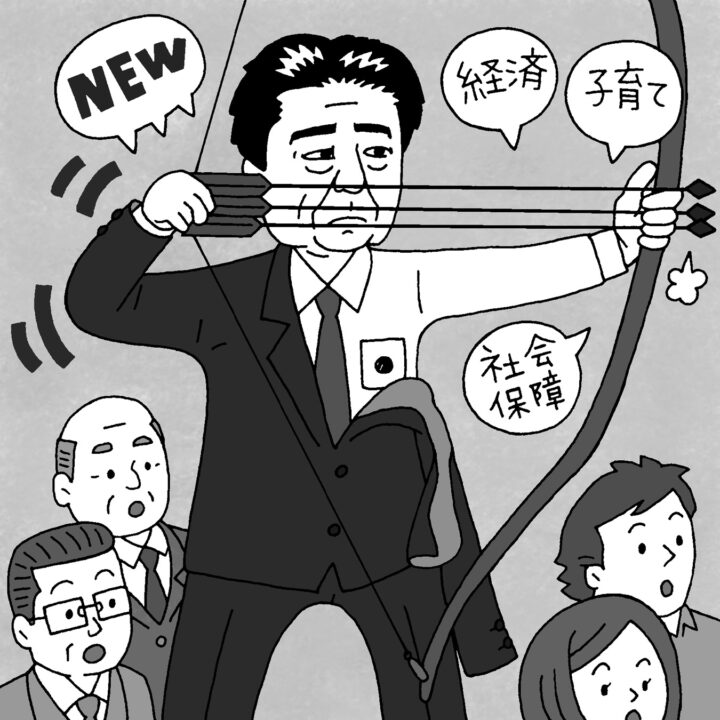
This illustration was created for the serialized column by economist Seki Obata.
For over ten years, I’ve illustrated editorial columns in political and economic magazines, and I particularly enjoy drawing political figures and current events with a touch of humor.
As seen in the ukiyo-e prints of the Edo period, satire has long been appreciated in Japanese culture. Unlike French satire, which often leans toward sharp critique, Japanese satire tends to be more down-to-earth and full of human warmth.
When sharing works with the public, I approach satire the same way I view celebrity impersonations—it’s important to show respect and not make the subject feel uncomfortable. That’s why I’m not drawn to overly aggressive or politically charged satire. If it’s not something that makes me smile while drawing it, then it’s not the kind of satire I want to create.
第1回「円安は本当に日本経済のためにいいことなのか?」
『週刊ポスト 小幡績 集中連載』小学館(2015)/Shukan Post Obata Seki Intensive Serials,” Shogakukan (2015)
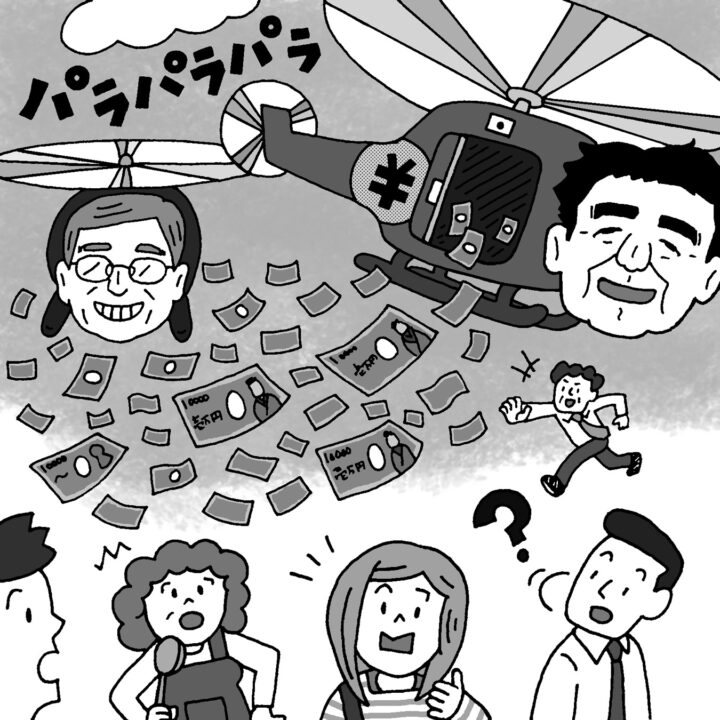
While a weaker yen benefits export-driven companies, it also drives up the cost of imported goods, including daily necessities and energy, making life harder for many. A weak yen is not universally good for everyone in Japan.
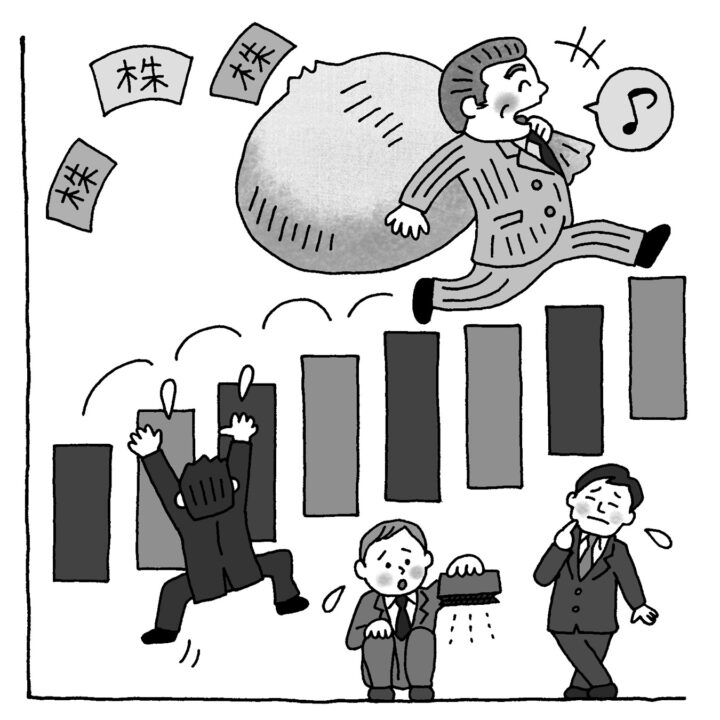
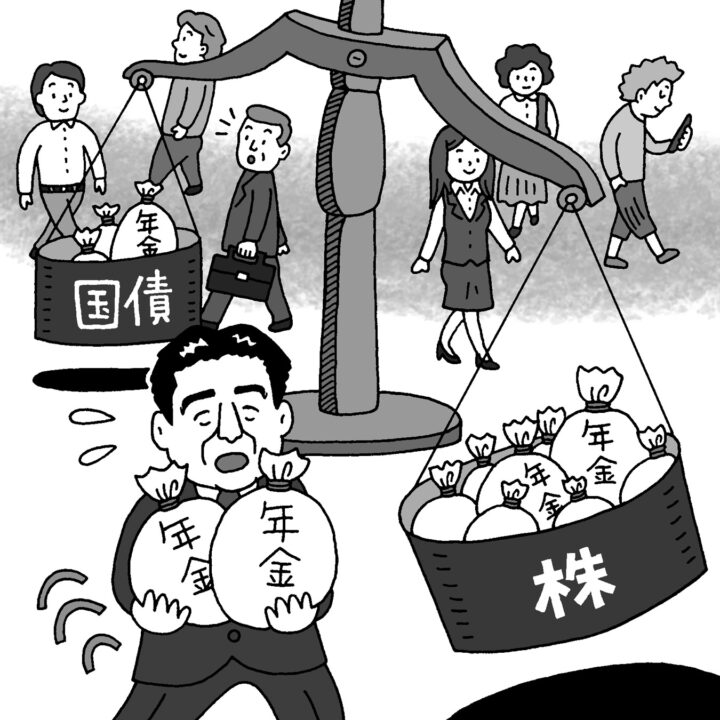
Rising stock prices may suggest a strong economy, but in reality, only a limited group—mainly investors and executives—benefits. For most salaried workers, it doesn’t translate into tangible economic improvement.
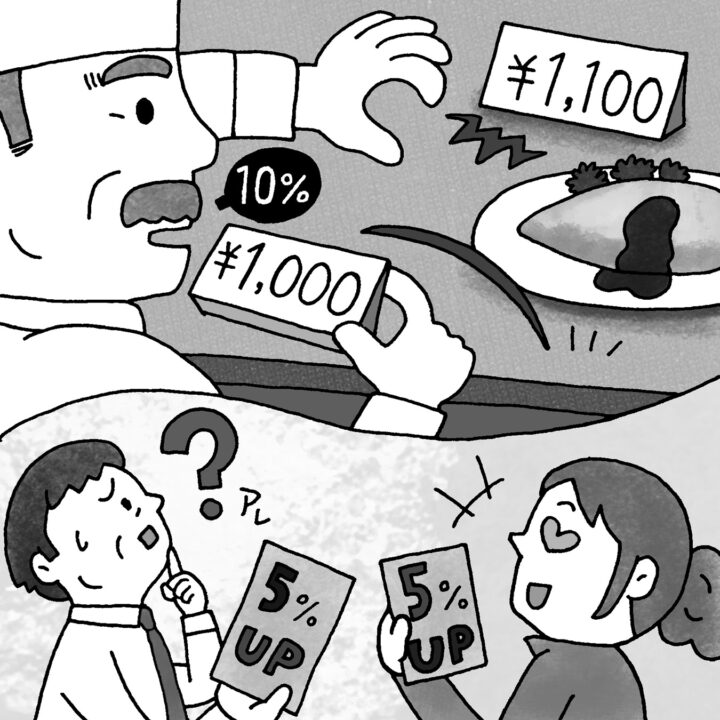
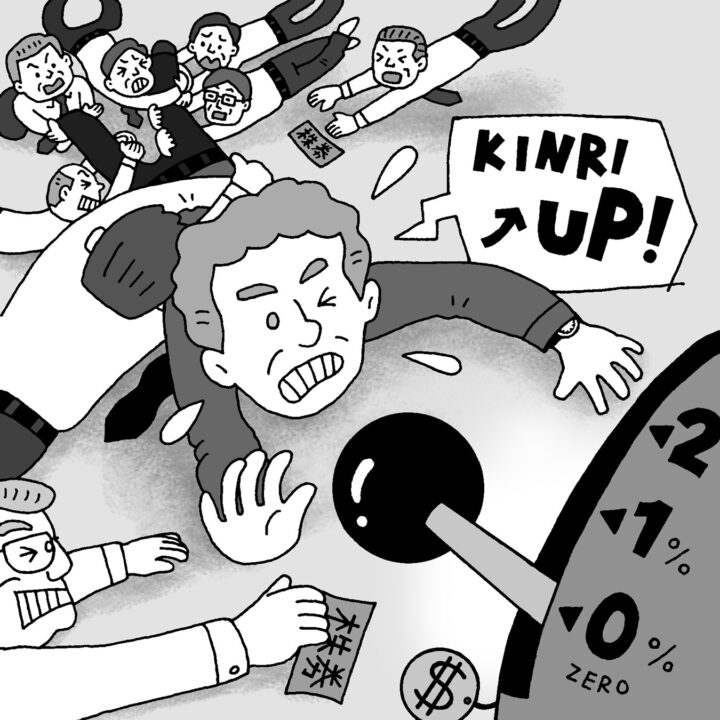
Even if wages increase, if prices rise as well, people won’t feel any richer. The loss in purchasing power undermines the effect of nominal wage growth.
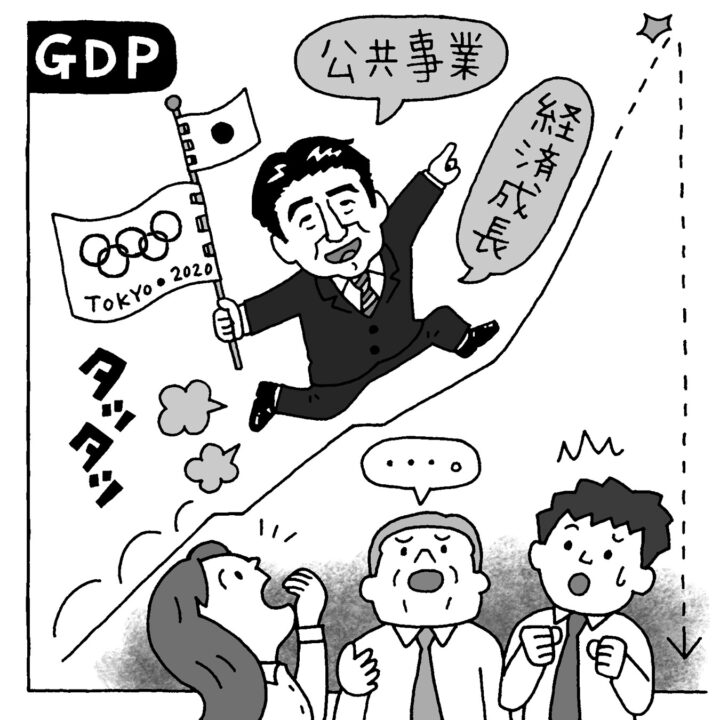
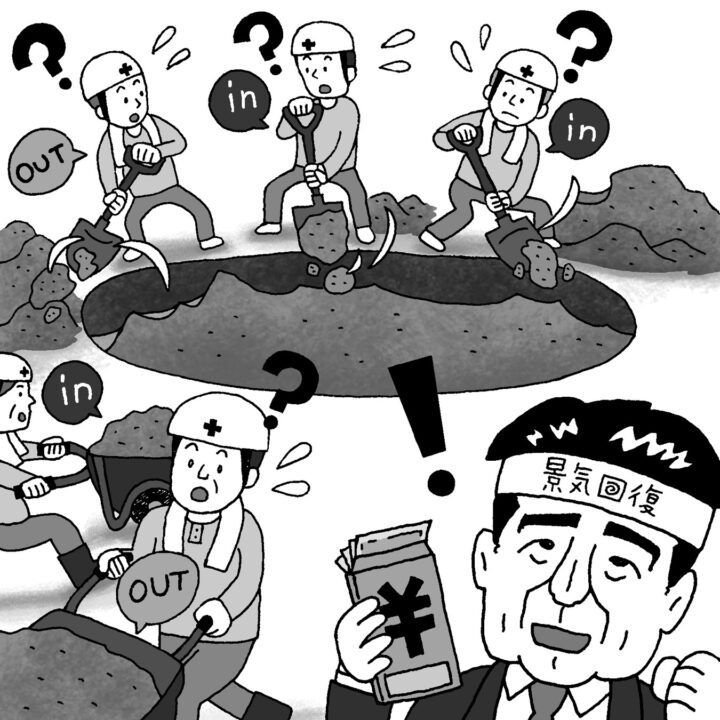
Stimulating the economy through public works often becomes inefficient, resembling digging holes only to fill them again—a questionable path to fiscal reconstruction.
Ten years have passed since then, and the economic landscape I depicted back then seems to have changed in some ways, but in many respects, it feels like not much has changed. The consumption tax has finally risen to 10%, and the Tokyo Olympics were delayed by a year due to the COVID-19 pandemic, but were ultimately held. At that time, Donald Trump had not yet become president, and Prime Minister Abe has since passed away.
Looking back at the illustrations from that time, some of them leave me thinking, “What was I trying to convey here?” However, the fact that many of the same issues are still being discussed today brings both surprise and a sense of acceptance. It makes me feel the unique nature of this country, but at the same time, I can’t help but feel frustrated by how little has changed.
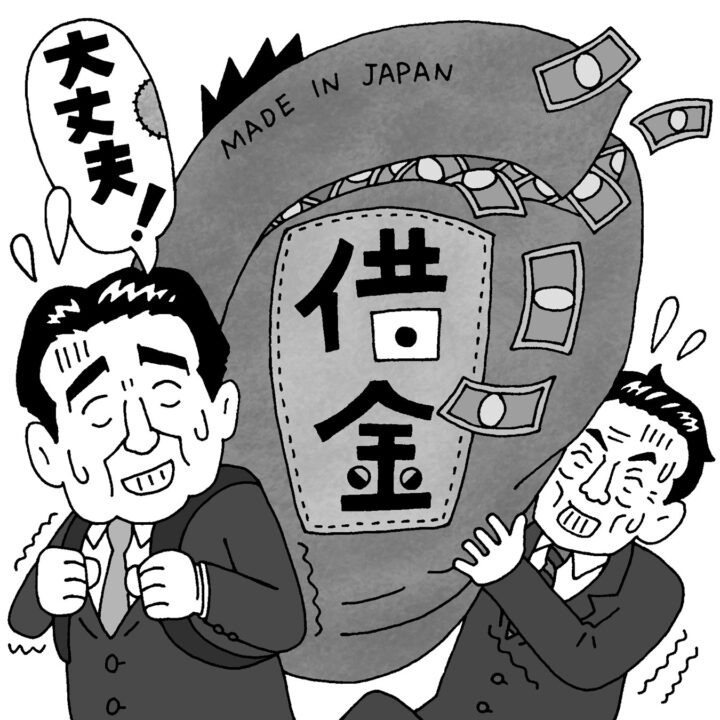
The national debt has not been reduced; it has only continued to accumulate, and with rising prices and international turmoil, the future remains increasingly uncertain. Recently, there have been whispers about the potential “Trump re-election shock,” and due to growing concerns about the economy, we’ve naturally become more cautious with our spending.
At least I hope that the “EXPO 2025 Osaka-Kansai World Expo,” held in my hometown, will become a symbol of a bright future where everyone can smile and enjoy.




 翻訳
翻訳